WELCOME The Midlands Fraud Forum (MFF) aims to promote awareness of fraud issues and promote best practice in countering fraud educate everyone on effective fraud prevention measures. Fraud occurs in both private and public sectors and will continue to escalate until we join forces and combat it together. |
Latest News
Upcoming Events
| Stop! Think Fraud National Campaign Against Fraud Stop! Think Fraud is backed by leading counter fraud experts who are uniting under one voice to provide consistent, clear and robust anti-fraud advice to the public. Fraud accounts for around 40% of all crime in England and Wales, with an estimated 3.2 million offences each year. The latest data from the Crime Survey of England and Wales shows it has reduced by 13% over the past year. The estimated cost of fraud to society is £6.8 billion in England and Wales. Fraud has also more than doubled in Scotland over the past 9 years and reports spiked in Northern Ireland during the pandemic, with a decline now being observed. The evidence led campaign draws on the expertise of leading counter-fraud experts and includes an online fraud hub which will provide concise, simple to follow advice. It will also signpost victims to relevant organisations for further advice and support. Impactful adverts will also be prominently displayed in public settings, from billboards to radio, and from TV screens to social media. It is anticipated the campaign will be seen by 95% of adults in the UK over the coming weeks. [Source: https://www.gov.uk/government/news/major-campaign-to-fight-fraud-launched 12 Feb 2024] CRIMINALS STEAL OVER HALF A BILLION POUNDS AND NEARLY 80 PER CENT OF APP FRAUD STARTS ONLINE UK Finance has released its half-year fraud report, detailing the amount its members reported as stolen through fraud and scams in the first half of 2023.
In the first six months of this year ruthless criminals had already stolen more than half a billion pounds from victims through fraud. In addition to the financial losses, these crimes often involve callous manipulation of the victim which can cause psychological and emotional harm. As the UK Finance report shows, criminals are increasingly using social media, online platforms, texts, phone calls and emails to deceive victims into giving up their personal details and their money. read more here Action Fraud warns of social media account and email takeover scamsAction Fraud is urging people to use strong passwords and 2-step verification after receiving thousands of reports about hacked email and social media accounts. 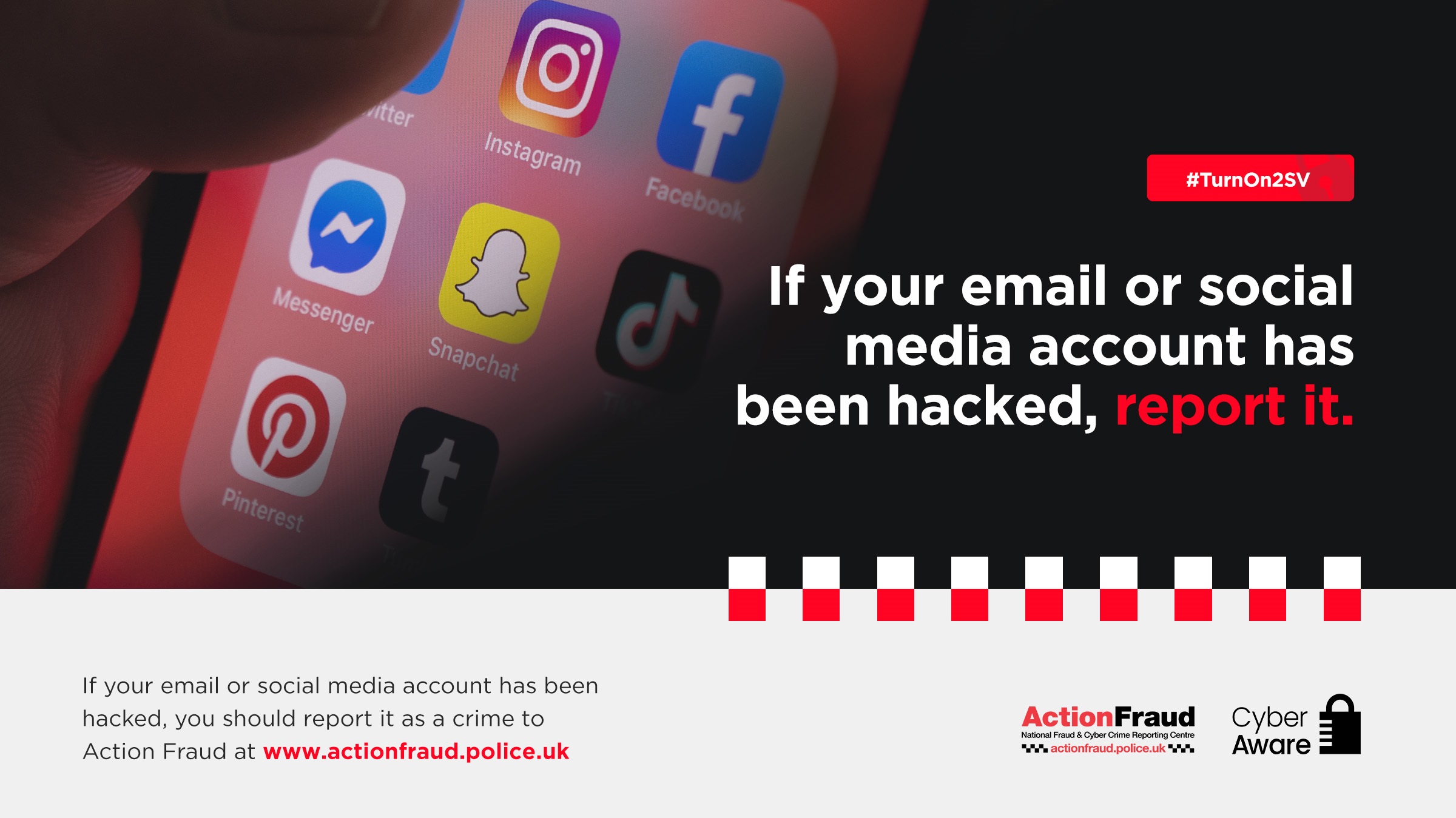
Data from Action Fraud, the national fraud and cybercrime reporting service, shows that from August 2022 – July 2023, there were 18,011 reports of social media and email hacking. Within these reports, 4,092 victims reported being extorted for money, or having their accounts used to perpetrate fraud against the wider public. In one example, Action Fraud has received over a dozen reports in the last two months relating to hacked social media accounts being utilised to promote fake Taylor Swift tickets. Members of the public are less likely to suspect it’s a scam if the tickets appear to be sold by someone who has lots of friends on their profile and posts dating back many years. What can you do to avoid being a victim?
If you live in England, Wales and Northern Ireland and have been a victim of fraud or cybercrime, report it at www.actionfraud.police.uk or by calling 0300 123 2040. In Scotland, victims of fraud and cybercrime should report to Police Scotland on 101. Suspicious emails should also be sent to SERS at report@phishing.gov.uk TAKEAWAYS FOR BUSINESS 1. Check out your businesses IP address and browser security with the NCSC’s new cyber security service (it is free and easy to use). https://checkcybersecurity.service.ncsc.gov.uk/ 2. Check your company accounts regularly. Whether it’s a bank account or payment service take the time to check the money coming into and out. If something seems odd question it! 3. Keep an eye on your invoices. If prices seem to be inflating rapidly, question it. Inflation may not be the only cause. 4. Business is encouraged to report fraud or cybercrime to Action Fraud. |
Publications To see titles. touch or hover over image. Click to go to the publication. 






|




.png)
| Midlands Fraud Forum Ltd. Reg.No: 06436330 |

